


VAE Polvere polimerica ridispersibile CAS 24937-78-8: Guida all'approvvigionamento per importatori e distributori
2026-07-30 16:45For importers and distributors supplying construction chemical raw materials across Southeast Asia, South Asia, Europe, and the Middle East, VAE Redispersible Polymer Powder is one of the highest-volume cellulose and polymer additives in the dry mix mortar segment. It is also one of the most technically variable products in the market, where grade differences invisible to the naked eye produce significant differences in mortar performance that reach your customers as warranty claims, debonding failures, and lost reorders. This guide covers what importers need to understand about RDP powder grades, quality parameters, and supplier selection before placing the first container order.
What Is VAE Redispersible Polymer Powder
VAE Redispersible Polymer Powder, carrying CAS number 24937-78-8, is produced by spray-drying vinyl acetate-ethylene copolymer emulsion with polyvinyl alcohol as protective colloid. The resulting white, free-flowing powder redisperses in water to re-form the original polymer emulsion, distributes uniformly through the dry mortar matrix during mixing, and forms a continuous flexible polymer film as the mortar cures. This film improves bond strength, flexibility, water resistance, and crack resistance of the finished mortar compared to unmodified cement systems.
What RDP Powder Grades Do Your Customers Need
RDP powder grades are differentiated by four parameters that determine which mortar application each grade serves. Understanding these parameters is what allows importers to match the correct product to each customer segment rather than selling a single grade across all applications and accepting the performance complaints that result.
Glass transition temperature, abbreviated Tg, is the most important grade parameter. Grades with Tg above 15 degrees Celsius are rigid and suitable for self-leveling compound and repair mortar where compressive strength is the priority. Grades with Tg between 0 and 10 degrees Celsius are flexible and suitable for exterior tile adhesive, EIFS base coat, and waterproofing mortar where thermal cycling crack resistance is the priority. Grades with Tg between 10 and 20 degrees Celsius are semi-flexible and suitable for standard interior tile adhesive, wall putty, and gypsum plaster where a balance of strength and flexibility is required.
Hydrophobic treatment separates standard grades from hydrophobic grades. Standard grade RDP performs well under intermittent water exposure but softens under permanent immersion. Hydrophobic grade RDP, produced with silicone or fatty acid surface treatment, maintains water resistance under permanent wet conditions. For importers supplying construction chemical manufacturers serving marine, below-grade, and swimming pool waterproofing markets, hydrophobic grade RDP is the correct product specification.
Ash content, typically 10 to 14 percent, reflects the inorganic content from the protective colloid system. Consistent ash content within 1 percent between batches indicates stable active polymer content and predictable mortar performance. Importers sourcing from suppliers who cannot provide per-batch ash content certificates are accepting undocumented active content variation that will produce mortar performance variation in their customers' products.
Redispersibility determines how completely and quickly the powder reforms the original emulsion when mixed with water. Complete redispersion within 2 to 3 minutes of water contact is required for uniform polymer film formation in mortar. Incomplete redispersion from poor surface treatment quality or moisture-damaged powder leaves undispersed particles that create weak zones in the cured mortar matrix.
What Quality Parameters Should Importers Verify
Redispersible polymer powder for import requires verification of four quality parameters before accepting a supplier for regular supply. Tg within 3 degrees Celsius of stated grade, ash content within 1 percent of stated value, redispersibility achieving full dispersion within 3 minutes, and moisture content below 2 percent to prevent caking during sea freight transit and warehouse storage.
Importers shipping to tropical markets across Southeast Asia and South Asia face additional quality risk from moisture exposure during transit. RDP powder stored in poorly sealed packaging in high-humidity sea container conditions can absorb moisture that causes partial redispersion and caking within the bag, reducing redispersibility and producing granular inconsistency in finished mortar. Specifying packaging with inner polyethylene liner sealed before outer kraft bag closure, and requesting moisture content testing on arrival documentation, reduces the rejection rate on tropical market deliveries.
How to Select Between Competing RDP Powder Suppliers
The correct approach for importers evaluating competing RDP powder suppliers is to request evaluation samples from at least three consecutive production batches, not a single selected sample. Single-batch evaluation shows the best product the supplier can produce. Multi-batch evaluation shows how consistent production actually is, which is the parameter that determines whether your customers experience consistent mortar performance over a twelve-month supply relationship.
RDP powder manufacturer for distributors who provide per-batch test certificates covering Tg, ash content, redispersibility, and moisture content as standard supply practice are demonstrating the production control capability required to support your customer relationships. Suppliers who provide only a general product specification sheet cannot demonstrate batch-to-batch consistency and should not be accepted as primary supply sources for volume distribution contracts.
Why EastChem
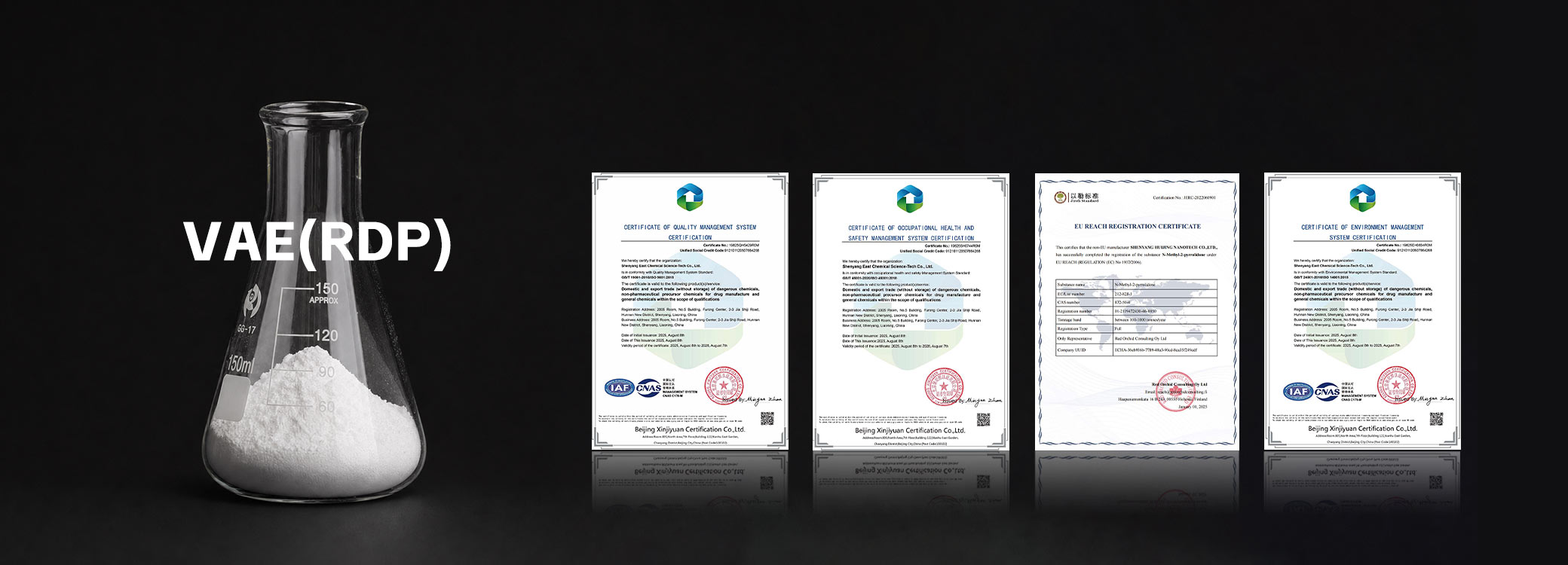
EastChem è un produttore affidabile di polveri RDP per distributori, che fornisce polvere polimerica ridispersibile VAE CAS 24937-78-8 in gradi rigidi, semiflessibili, flessibili e idrofobici a importatori, distributori di prodotti chimici per l'edilizia e produttori di malte premiscelate in tutto il mondo. La nostra produzione è certificata secondo i sistemi ISO 9001, ISO 14001 e ISO 45001 e i nostri prodotti soddisfano i requisiti di conformità REACH per l'accesso al mercato europeo. La temperatura di transizione vetrosa (Tg), il contenuto di ceneri, la ridispersibilità e il contenuto di umidità vengono testati su ogni lotto di produzione e vengono forniti certificati per lotto come standard.
Contatta EastChem oggi stessoper richiedere campioni di valutazione di diverse qualità e lotti, certificati di qualità per lotto o prezzi per le vostre esigenze di importazione o distribuzione.
Email: info@eschemy.com
WhatsApp: +86 13504015521
Domande frequenti
Qual è la quantità minima d'ordine per l'importazione di polvere RDP?
La polvere polimerica ridispersibile VAE CAS 24937-78-8 è disponibile presso EastChem con un quantitativo minimo d'ordine a partire da 1000 kg per grado, con possibilità di spedizioni in container completi per gli importatori che necessitano di volumi maggiori con costi di trasporto marittimo ottimizzati per chilogrammo di principio attivo. È possibile combinare più gradi in un'unica spedizione in container per minimizzare i costi di trasporto unitari per una gamma di prodotti misti.
Come si deve conservare la polvere RDP dopo l'arrivo per mantenerne la qualità?
La polvere RDP deve essere conservata in un magazzino asciutto e ventilato a una temperatura inferiore a 30 gradi Celsius, al riparo dalla luce solare diretta e da fonti di umidità. La confezione originale sigillata deve essere conservata fino al momento dell'utilizzo. Una volta aperte, le confezioni parzialmente utilizzate devono essere richiuse immediatamente per evitare l'assorbimento di umidità e la formazione di grumi. In condizioni di conservazione corrette, la durata di conservazione è di 12 mesi dalla data di produzione. Per i mercati tropicali, si raccomanda la conservazione in magazzino coperto e deumidificato per mantenere la qualità del prodotto durante periodi di stoccaggio prolungati tra gli arrivi dei container.
Quale documentazione devono richiedere gli importatori per ogni spedizione di polvere RDP?
La documentazione standard per ogni spedizione di polvere RDP deve includere certificati di prova per lotto relativi a Tg, contenuto di ceneri, ridispersibilità e contenuto di umidità; una scheda di dati di sicurezza conforme ai requisiti del mercato di destinazione; e una dichiarazione di conformità REACH per le spedizioni destinate al mercato europeo.Contattaciper discutere i requisiti di documentazione specifici per il vostro mercato di destinazione e la vostra clientela.